
Mortgage and equity: how the bank does its sums
Swiss banks finance a home according to rules that differ from those in most countries. The mortgage never has to be repaid in full, but in return the bank tests your income against an interest rate that is considerably higher than the one you actually pay. Once you have understood this, you know within five minutes what you can afford.
The three rules
1. You bring one fifth yourself. Banks usually lend up to 80 per cent on owner-occupied property. The remaining 20 per cent is your equity (Eigenmittel). At least half of it, i.e. 10 per cent of the lending value, must not come from your pension fund (Pensionskasse), whether as an early withdrawal or as a pledge. Savings, securities, pillar 3a (Säule 3a) and gifts count as this kind of “hard” equity.
2. The costs must not exceed one third of your gross income. Here the bank does not calculate with today’s interest rate but with an imputed rate, usually 5 per cent. Added to this are ancillary costs of around 1 per cent of the property value, and the amortisation. This calculation is called affordability (Tragbarkeit). Each bank sets the exact figures itself.
3. Part is repaid, the rest remains outstanding. Within 15 years, and by retirement at the latest, the mortgage must fall to two thirds of the value. The rest may remain outstanding as long as affordability is met. Repayment can be made directly or indirectly via pillar 3a.
A worked example
| Item | Amount |
|---|---|
| Purchase price | CHF 1,200,000 |
| Equity 20% | CHF 240,000 |
| of which, as a minimum, not from the pension fund | CHF 120,000 |
| Mortgage | CHF 960,000 |
| Imputed interest 5% | CHF 48,000 per year |
| Ancillary costs 1% | CHF 12,000 per year |
| Amortisation to two thirds in 15 years | CHF 10,700 per year |
| Calculated costs | CHF 70,700 per year |
| Gross income required | around CHF 212,000 per year |
This is the bank’s calculation, not your actual outgoings. What you really pay depends on the interest rate you agree with the bank.
If the price is above the valuation
The bank lends against the lower of two values: the purchase price or its own valuation. If you pay more than the bank values the property at, you bear the difference entirely from your own funds, and without pension fund money.
Money from the pension fund
You can withdraw or pledge pension fund assets for owner-occupied property.
- Minimum amount for an early withdrawal: CHF 20,000, possible every five years
- From the age of 50 the amount is limited
- The withdrawal is taxed as a lump-sum benefit, separately from your other income
- A restriction on sale is noted in the land register; if you sell, the money flows back into your pension provision, unless you buy owner-occupied property again within two years
- Your spouse must consent in writing
Important for new arrivals: pension fund assets build up over the years. Anyone who has only recently started working in Switzerland is better off planning their equity from other sources.
Fixed or variable
Fixed-rate mortgage: The interest rate is guaranteed for a fixed term, typically two to ten years. You know what you will pay, but you are tied in.
SARON mortgage: The interest rate follows the money market and changes continuously. In return, you bear the interest rate risk.
The mortgage can be split into several tranches with different terms.
Taxes: what applies until 2028 and what applies from 2029
Up to and including 2028, as an owner you pay tax on the imputed rental value (Eigenmietwert), a notional income for living in your own home. In return, you deduct mortgage interest and maintenance.
From 1 January 2029, the imputed rental value is abolished. Voters approved the change of system on 28 September 2025. For the owner-occupied home, the deductions for maintenance and, in principle, for debt interest cease to apply at the same time. Debt interest remains deductible only on a pro rata basis if you also own let properties. The cantons may retain deductions for energy-efficiency renovations for a limited period. Anyone buying residential property in Switzerland for the first time can claim a decreasing interest deduction for ten years: in the first year a maximum of CHF 10,000 for married couples and CHF 5,000 for single persons.
What this means for you: in future a high mortgage will be less worthwhile for tax purposes. Discuss this with your tax adviser before you decide on the financing.
What we do and what we do not do
We are not a bank and we do not broker mortgages. However, Dieter Ruf will tell you whether the price of a property fits what a bank is likely to value it at. That spares you the surprise described in the section above.
Sources: FINMA, recognition of the self-regulation, valid from 1 January 2025 · FSIO, promotion of home ownership using occupational pension funds · Federal Council, change of system enters into force on 1 January 2029 · FDF, fact sheet on the debt interest rules
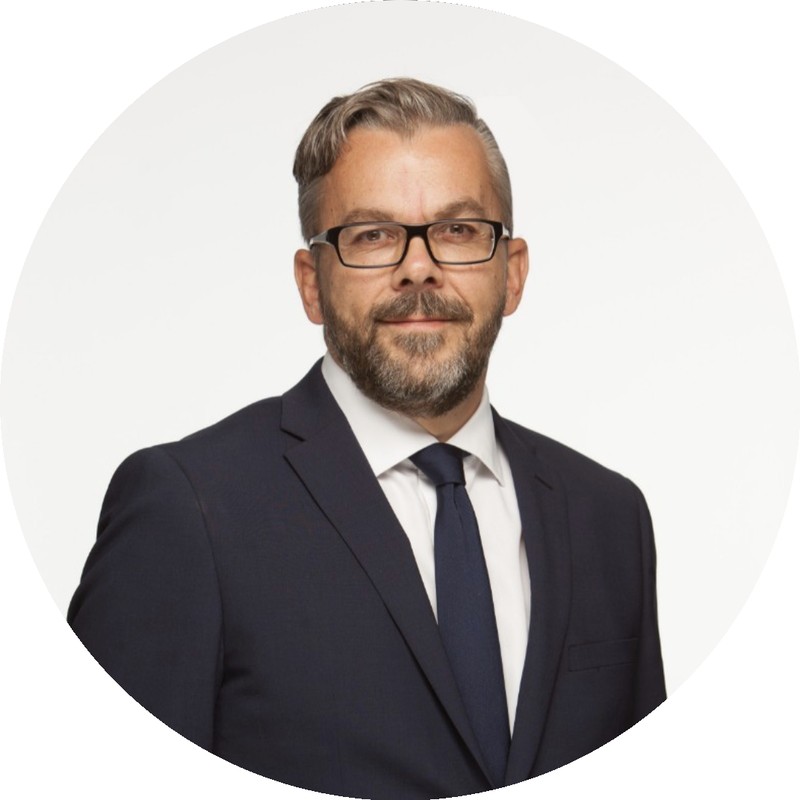
“I look at every property myself. A sound valuation needs a site visit – and a conversation about what you actually intend to do.”
Madiba has been managing and brokering property in Basel since 1964. Mr Ruf handles the sale himself, from the first valuation to the notarial deed.
Arrange a meetingSwitchboard +41 61 295 95 95
Arrange a conversation
Switchboard +41 61 295 95 95
Arrange a conversation